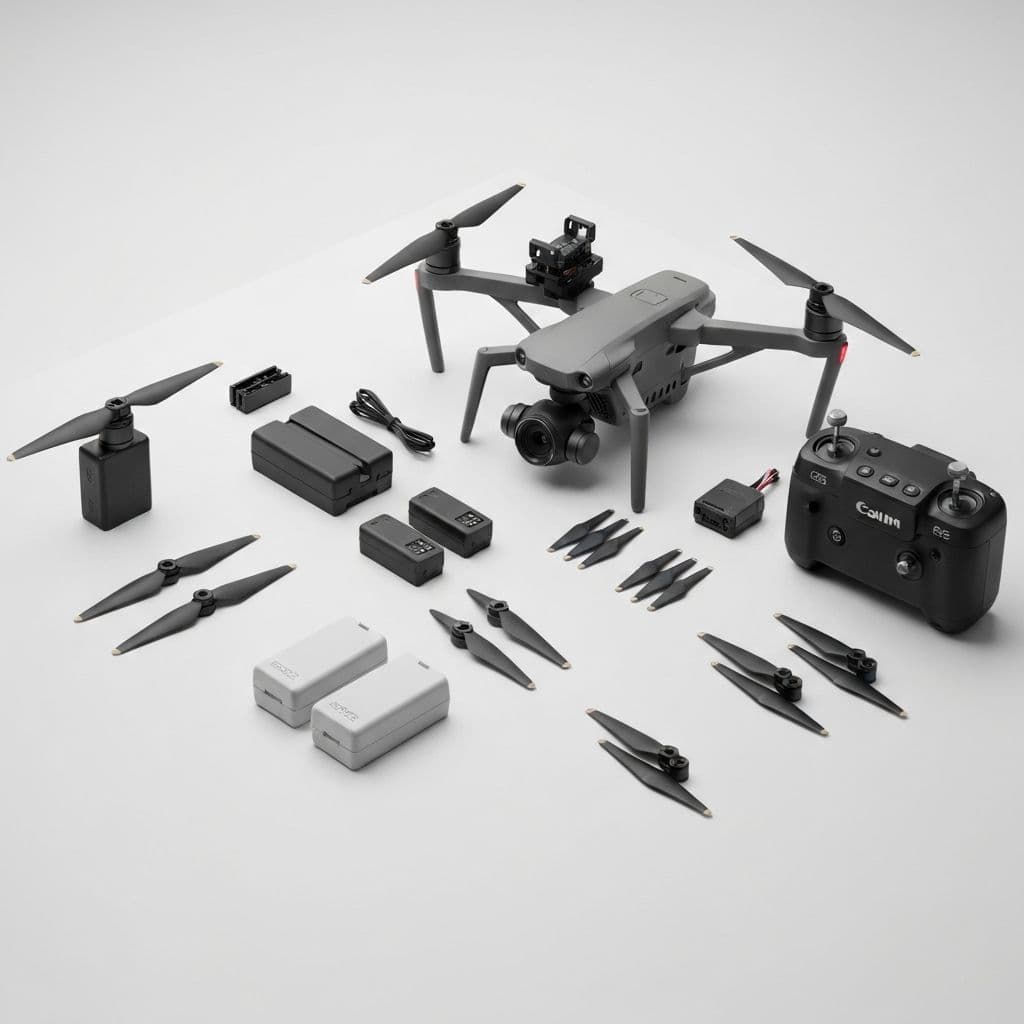
Product Category
Drones & Accessories
Discover our full range of professional and commercial drones alongside comprehensive accessory lines. From aerial photography to precision agriculture, we supply the right solutions for every application.
Why Choose Us
Partnership with leading drone manufacturers for competitive factory pricing
Complete accessory ecosystem including batteries, gimbals, propellers, and controllers
Custom drone solutions for agriculture, inspection, mapping, and delivery
Full regulatory compliance documentation for international import/export
Technical support and after-sales service with global warranty coverage
Bulk ordering with customized branding and packaging options
Solution Blueprint
5 Core Systems of a Drone
Every drone consists of five essential subsystems working in harmony. Understanding each system helps you select the right components for your specific application needs.
Flight Controller (FC)
Acts as the "brain" of the drone. It integrates IMU (gyroscope + accelerometer), barometer, and main control chip. It reads sensor data hundreds of times per second, calculates attitude deviation through PID algorithms, and outputs PWM/DShot signals to ESCs to correct motor speed.
Maintains flight stability. Enables self-stabilization, altitude hold, position hold, and autonomous waypoint flight. It is the core of drone intelligence.
GPS / GNSS Module
Receives satellite signals and calculates latitude, longitude, altitude, and speed through triangulation positioning. Uses a compass (magnetometer) to determine heading direction.
Provides absolute position reference. Enables "Return-to-Home", position hold, autonomous cruise, and failsafe protection.
Receiver (RX)
Receives radio signals from the ground transmitter (e.g., SBUS, CRSF protocols), decodes them, and converts them into control channel data recognizable by the flight controller.
Establishes the human-machine communication link, allowing the pilot to control the drone attitude in real time or switch flight modes.
Power Module / PDB
Converts the battery's high voltage (e.g., 22.2V) through buck circuits to stable low voltages (5V/3.3V) required by the FC and peripherals, while monitoring current and voltage data in real time.
Provides clean, stable power for sensitive electronics, prevents motor noise interference, and provides low-battery warnings.
Brushless Motor
Based on electromagnetic induction, it uses three-phase AC current to generate a rotating magnetic field in stator coils, driving the rotor permanent magnets to rotate and converting electrical energy into mechanical energy.
Provides lift and thrust. Its KV value (speed constant) directly determines the drone's payload capacity and response speed.
Electronic Speed Controller (ESC)
Acts as the "translator". It receives weak signals from the FC, controls internal MOSFET switching, and inverts the battery DC into three-phase AC to precisely regulate motor speed and direction.
Executes attitude correction commands from the FC. Without it, the FC cannot control the motors. It is the key execution unit for complex flight maneuvers.
Propeller
Utilizes aerodynamic airfoil design. When rotating, the upper and lower surfaces create a pressure difference (Bernoulli principle), generating upward lift or forward thrust.
Converts the motor's rotational kinetic energy into aerodynamic force. Blade size and pitch directly affect flight efficiency and noise levels.
LiPo Battery
Lithium polymer batteries convert chemical energy to electrical energy through lithium-ion intercalation and deintercalation between electrodes, capable of instantaneous high-rate current discharge.
The energy source of the entire system. Its discharge rate (C-rating) determines the propulsion burst power, and capacity determines flight duration.
Video Transmitter (VTX)
Modulates the video signal captured by the camera onto a specific radio frequency (e.g., 5.8GHz analog or 2.4GHz digital encoded signal) and transmits it through a power amplifier.
Enables First Person View (FPV) or remote monitoring, allowing the pilot to see the aerial view from the ground. It is the "eyes" for beyond-visual-line-of-sight flight.
Antenna
As an impedance matching converter, it transforms high-frequency current from the transmitter into electromagnetic wave radiation in space, or captures electromagnetic waves and converts them to current.
Determines signal coverage, penetration, and anti-interference capability. Mounting position and polarization direction directly affect video transmission quality.
Ground Receiver / Goggles
Tunes to the same frequency as the transmitter, demodulates the received radio waves, and restores the video signal for display on a screen or goggles.
Completes the image transmission loop, allowing the operator to observe the flight environment and payload status in real time.
Camera / Sensor
Focuses light through lenses onto photosensitive elements (CMOS/CCD), converting optical signals to electrical signals and digitizing them; or emits laser/infrared to detect environmental data.
The core of mission execution (aerial photography, surveying, inspection, search and rescue). It is the direct tool through which drones generate application value.
Gimbal (3-Axis Stabilizer)
Uses brushless motors and IMU data through inverse compensation algorithms to maintain absolute camera axis stability during violent attitude changes of the aircraft (three-axis stabilization).
Eliminates the impact of flight vibration and attitude changes on footage, ensuring smooth and stable shots or precise sensor data orientation.
Center Plate & Arms
Made of high-strength lightweight materials such as carbon fiber, designed with structural mechanics to fix motors, ESCs, FC, and other components in specific geometric positions, forming a rigid assembly.
Provides physical support and resists aerodynamic loads and vibration during flight. Wheelbase and layout determine the drone's stability, maneuverability, and maximum payload.
Landing Gear & Fasteners
Landing gear provides ground clearance to protect bottom-mounted equipment; screws and adhesives connect components through friction and chemical bonding.
Ensures safe takeoff and landing, prevents equipment ground contact damage, and ensures all components stay secure during high-speed flight.
Featured Products
Browse our curated selection of top-quality products.
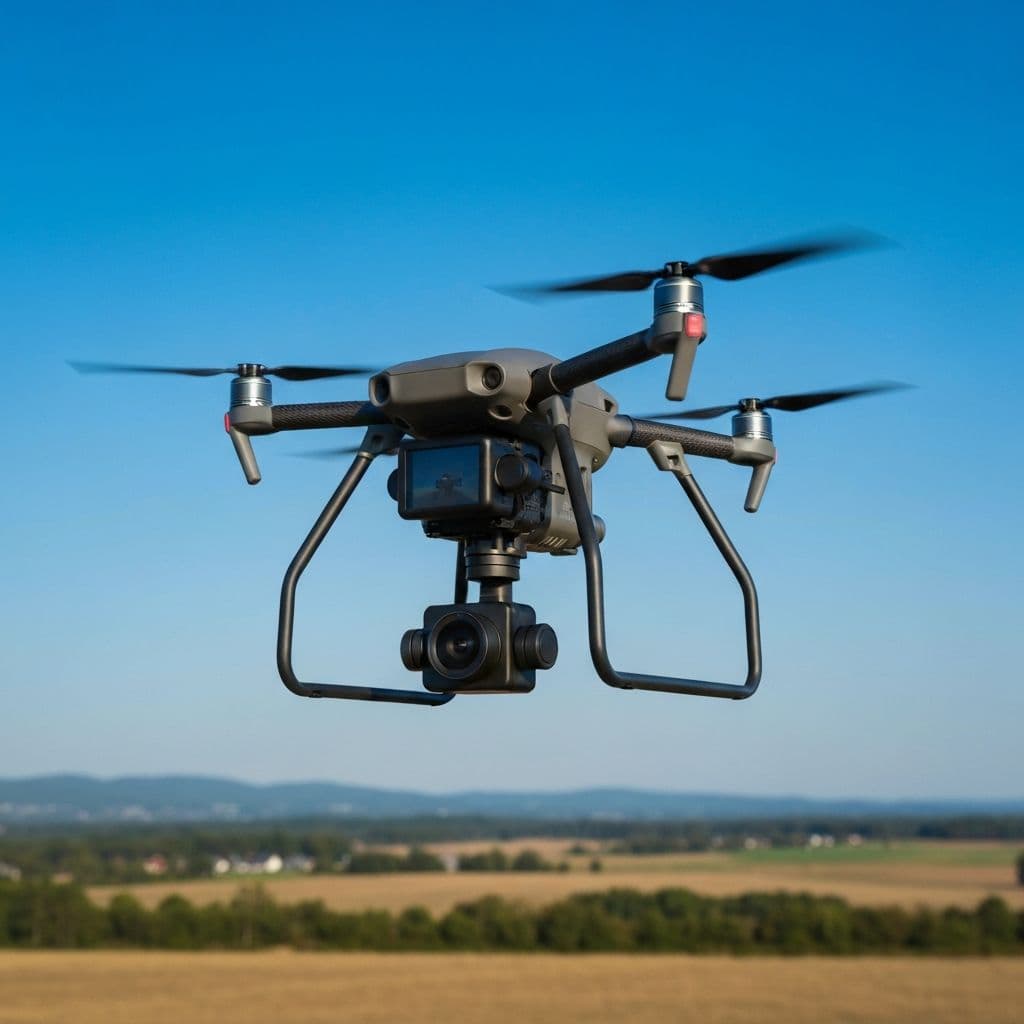
Photography & Survey Drones
High-performance aerial photography and surveying drones with 4K/8K cameras, advanced stabilization, and extended flight time for professional use.
- 4K Camera
- 30min Flight
- GPS RTK
- Obstacle Avoidance
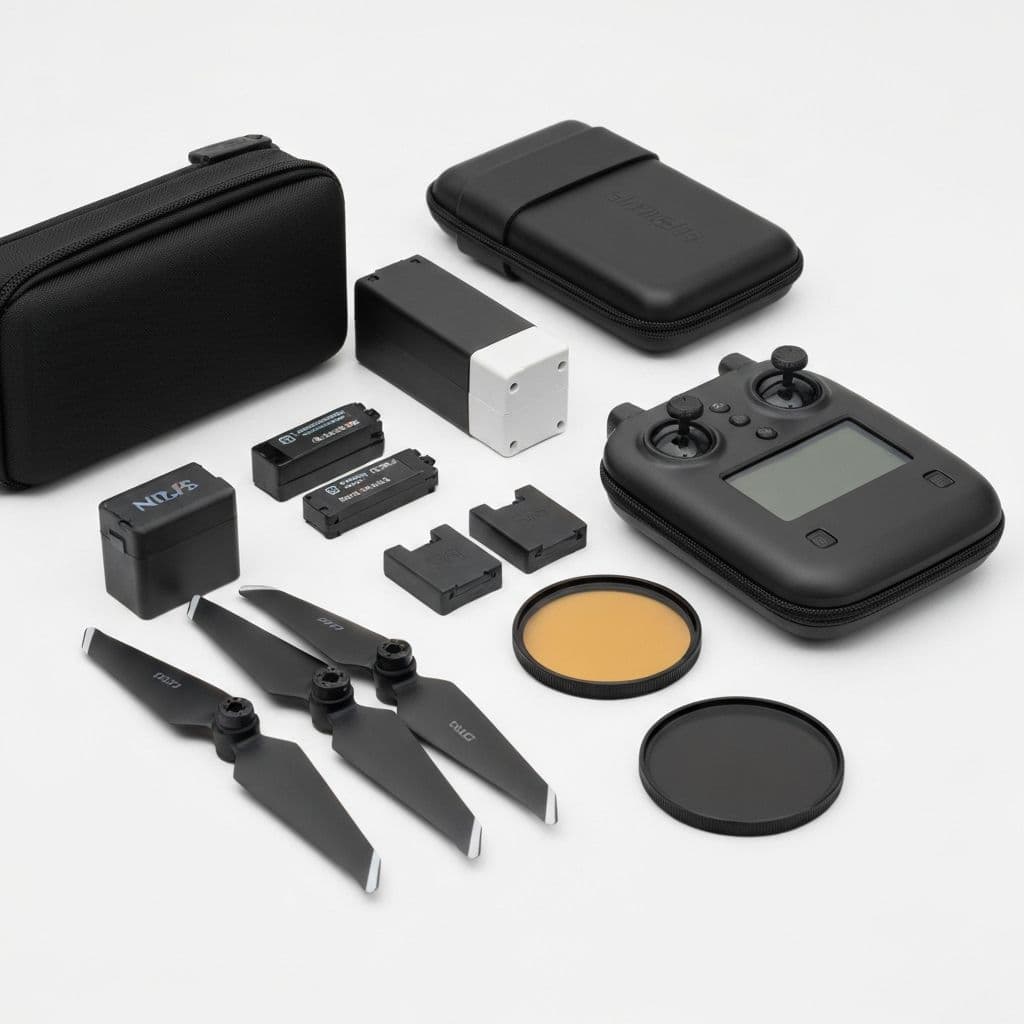
Drone Accessories & Parts
Complete range of drone accessories including spare batteries, propellers, ND filters, carrying cases, charging hubs, and remote controllers.
- Batteries
- Propellers
- Filters
- Controllers
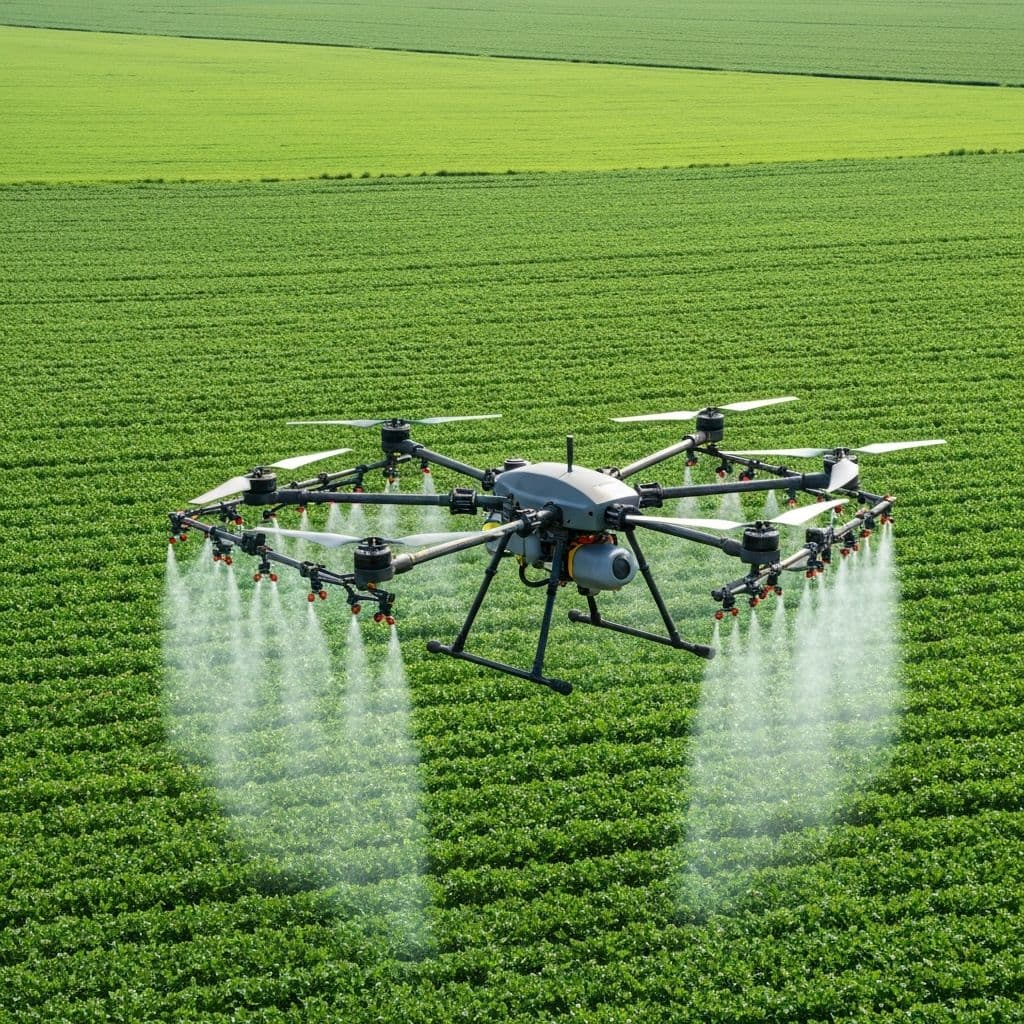
Agricultural & Industrial Drones
Heavy-duty drones for precision agriculture spraying, power line inspection, search and rescue, and industrial applications with custom payload options.
- 16L Tank
- Spraying
- Thermal Camera
- IP67
Interested in Our Products?
Get in touch with our team for pricing, samples, and custom orders.